Mesenchymal Stem Cell therapy has become one of the most widely discussed innovations in regenerative medicine due to its potential to treat a variety of chronic and degenerative conditions. Instead of simply managing symptoms like traditional treatments, MSC therapy focuses on supporting the body’s natural ability to heal and repair damaged tissues. This shift from symptom control to regeneration is what makes it so appealing to researchers and patients worldwide. As interest grows, it is important to understand what MSC therapy is, how it works, and what science says about its safety and effectiveness.
What Are Mesenchymal Stem Cells (MSCs)?
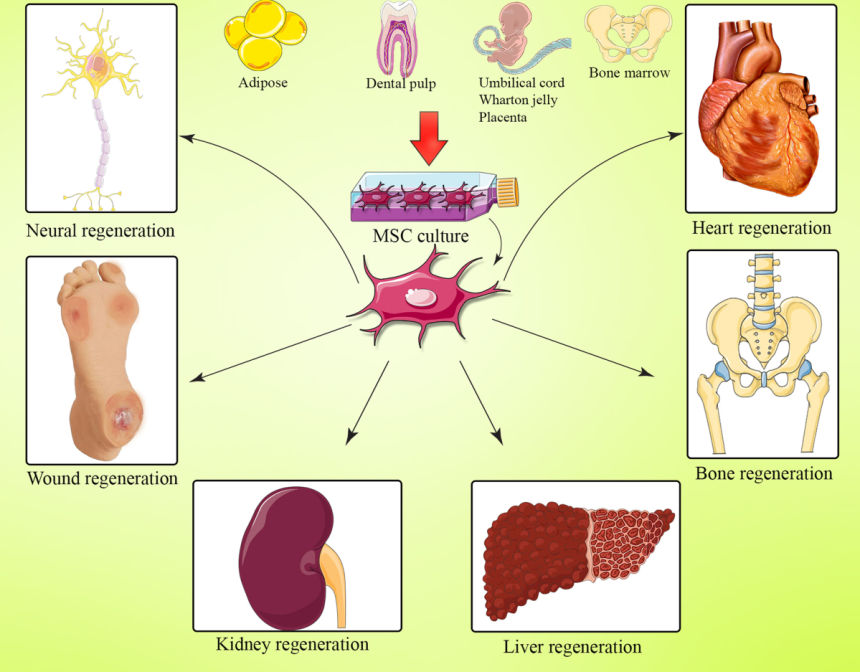
Mesenchymal stem cells are adult stem cells that exist in several tissues of the human body, including bone marrow, fat tissue, umbilical cord tissue, and even dental pulp. These cells are unique because they have the ability to develop into different types of cells such as bone, cartilage, and fat cells. Beyond this, they play a major role in regulating inflammation and supporting tissue repair. Unlike embryonic stem cells, MSCs do not raise ethical concerns and are considered safer due to their low risk of uncontrolled growth, making them a key focus in modern regenerative medicine research.
How Mesenchymal Stem Cell Therapy Works
The effectiveness of MSC therapy does not rely on directly replacing damaged cells but rather on influencing the body’s internal healing environment. Once introduced into the body through intravenous infusion or targeted injection, MSCs naturally migrate toward areas of injury or inflammation. At these sites, they help regulate immune system activity by reducing excessive inflammation that often contributes to chronic disease progression. They also release bioactive molecules that stimulate tissue repair, encourage the formation of new blood vessels, and protect existing cells from further damage. Through these combined actions, MSCs create conditions that allow the body to repair itself more efficiently.
Conditions Treated with Mesenchymal Stem Cell Therapy
Mesenchymal stem cell therapy is being explored for a wide range of medical conditions. In orthopedic medicine, it is commonly studied for osteoarthritis, tendon injuries, ligament damage, and cartilage degeneration, where it may help reduce pain and improve joint function. In autoimmune diseases such as rheumatoid arthritis, lupus, and multiple sclerosis, MSCs are being investigated for their ability to regulate overactive immune responses and reduce inflammation. Neurological conditions like Parkinson’s disease, stroke recovery, and spinal cord injuries are also areas of active research due to the potential neuroprotective effects of MSCs. In cardiovascular medicine, MSCs are being studied for their role in improving heart function in conditions such as heart failure and ischemic heart disease. Additionally, research is ongoing into their use for inflammatory bowel disease, chronic lung conditions like COPD, and difficult-to-heal skin wounds and burns.
Science Behind Mesenchymal Stem Cell Therapy
The scientific foundation of MSC therapy is based on decades of laboratory and clinical research that highlights their unique biological properties. One of their most important roles is controlling inflammation by reducing the activity of harmful inflammatory molecules in the body. They also communicate with surrounding cells through paracrine signaling, where they release chemical factors that influence healing and regeneration. Another important function is angiogenesis, which is the formation of new blood vessels that improve oxygen and nutrient delivery to damaged tissues. Additionally, MSCs help regulate immune system responses, ensuring that inflammation does not become excessive or destructive. Clinical studies have shown promising results in conditions such as osteoarthritis, autoimmune disorders, and soft tissue injuries, although outcomes vary depending on the patient and condition.
Procedure: What Happens During MSC Therapy?
The process of mesenchymal stem cell therapy begins with a thorough medical evaluation to determine whether the patient is a suitable candidate. Once eligibility is confirmed, the source of stem cells is selected, which may either come from the patient’s own body or from carefully screened donor material. The cells are then processed in a laboratory setting where they are isolated, purified, and sometimes expanded to increase their number and effectiveness. After preparation, the cells are administered to the patient either through intravenous infusion or direct injection into the affected area, depending on the medical condition being treated. Following the procedure, patients are monitored over time to evaluate improvements in symptoms, function, and overall recovery.
Safety of Mesenchymal Stem Cell Therapy
Safety is one of the key reasons MSC therapy has gained attention in the medical field. When performed in properly regulated clinical environments, it is generally considered safe with a low incidence of serious side effects. Most reported reactions are mild and temporary, such as slight fever, fatigue, or discomfort at the injection site. One of the reasons for its favorable safety profile is that MSCs do not typically trigger strong immune rejection and have a low risk of forming tumors. However, risks can still exist if the procedure is performed in unregulated settings, including potential infection or immune complications. Because of this, it is essential that treatment is carried out under qualified medical supervision with proper laboratory standards.
Results: What Can Patients Expect?
The results of mesenchymal stem cell therapy vary widely depending on factors such as the type of disease, severity of the condition, patient health, and quality of the stem cells used. In the short term, many patients report reduced inflammation, decreased pain, improved mobility, and better overall comfort within weeks to a few months after treatment. In the longer term, some patients may experience slowed disease progression, improved tissue function, and enhanced quality of life, particularly in chronic conditions. However, it is important to understand that MSC therapy is not a guaranteed cure. While some individuals experience significant improvement, others may notice only moderate or temporary benefits, making outcomes highly individualized.
Limitations of Mesenchymal Stem Cell Therapy
Despite its promise, mesenchymal stem cell therapy still has several limitations that must be considered. One major challenge is the lack of standardized treatment protocols across different countries and clinics, which can lead to variations in results. The quality and potency of stem cells can also differ depending on how they are sourced and processed. Additionally, long-term clinical data is still limited for many conditions, meaning the full effects over time are not completely understood. Another factor is cost, as MSC therapy can be expensive and is not always covered by insurance. These limitations highlight the need for continued research and larger clinical trials.
Future of Mesenchymal Stem Cell Therapy
The future of MSC therapy is highly promising as advancements in biomedical research continue to evolve. Scientists are working toward more personalized approaches where treatments can be tailored to an individual’s genetic and medical profile. Improvements in laboratory techniques are also enhancing the potency and consistency of stem cells. Another growing area is combination therapy, where MSCs are used alongside medications or other regenerative treatments to improve outcomes. With more global clinical trials underway, MSC therapy may eventually become a standardized treatment option for a wide range of diseases in mainstream medicine.
Conclusion: Is Mesenchymal Stem Cell Therapy Worth It?
Mesenchymal stem cell therapy represents an important advancement in regenerative medicine with the potential to transform the treatment of chronic and degenerative diseases. Its ability to reduce inflammation, support tissue repair, and regulate immune function makes it a promising therapeutic option. However, it is not a miracle cure, and results can vary significantly from person to person. As research continues to develop, MSC therapy may become more refined, standardized, and widely accessible. For now, patients should approach it with realistic expectations and always seek treatment from qualified medical professionals in regulated clinical settings.