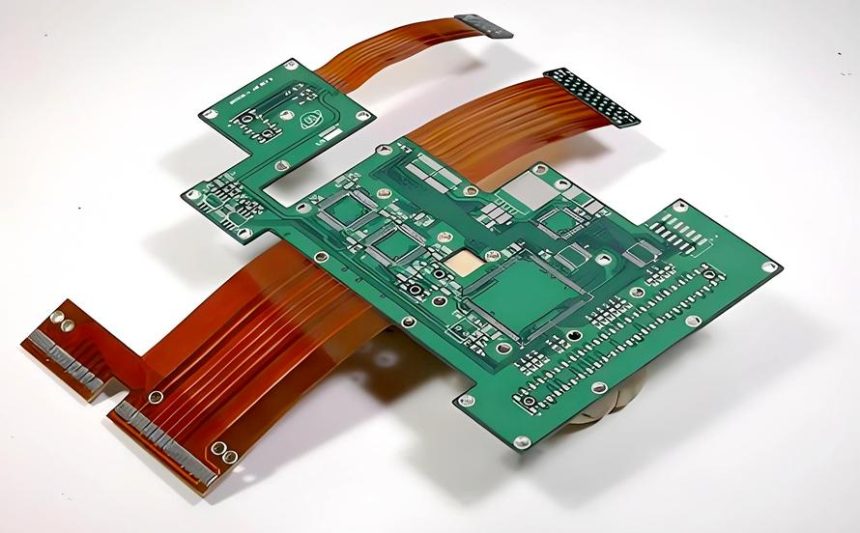
Modern electronic products often need to fit into smaller spaces while supporting more functions and reliable electrical performance. Conventional rigid circuit boards can provide mechanical stability, while flexible PCBs can bend and conform to different shapes. Rigid-flex technology combines these characteristics into a single circuit board, making it useful for applications where space, reliability, and design flexibility are important.
Rigid-flex PCB assembly involves mounting electronic components onto a circuit board that contains both rigid and flexible sections. The assembly process requires careful consideration of component placement, board handling, soldering, flex areas, and mechanical requirements. When properly designed and manufactured, rigid-flex assemblies can reduce interconnections while providing greater freedom for product designers.
What Is Rigid-Flex PCB Assembly?
Rigid-flex PCB assembly is the process of assembling electronic components onto a printed circuit board that combines rigid PCB sections with flexible circuit sections. The rigid areas provide structural support for components, while the flexible sections allow the circuit to bend or fold.
Unlike a conventional rigid PCB connected to a separate flex cable, a rigid-flex board integrates the two technologies into one interconnected structure. This can eliminate some connectors and cables that would otherwise be required between separate boards.
Rigid-flex assemblies can use surface mount technology (SMT), through-hole technology (THT), or a combination of both, depending on the product design. The choice depends on component types, mechanical requirements, electrical performance, and manufacturing considerations.
How Does Rigid-Flex PCB Assembly Work?
The assembly process begins with a detailed review of the PCB design and manufacturing documentation. Gerber files, bill of materials (BOM), pick-and-place files, assembly drawings, and flex-specific design information may be reviewed before production.
The rigid sections are generally handled similarly to conventional PCB assemblies during component placement. Solder paste is applied to the required pads, and automated pick-and-place equipment positions surface mount components.
The board then passes through a controlled reflow process to form solder joints. Special attention is required when flexible sections are present because excessive mechanical stress or inappropriate handling can damage these areas.
After SMT processing, through-hole components or other components can be installed if required. Inspection and testing are performed before the completed assembly moves to final integration.
What Are the Benefits of Rigid-Flex PCB Assembly?
One of the main advantages of rigid-flex circuit board assembly is space efficiency. The flexible sections can bend around mechanical structures, allowing designers to use available space more effectively.
Another benefit is the reduction of connectors and cables. Since rigid and flexible sections are integrated into one PCB structure, some separate interconnections may no longer be necessary.
Fewer connectors can also reduce potential connection points that could become loose or damaged during operation. This can be valuable in products exposed to vibration, movement, or repeated mechanical stress.
Rigid-flex technology can also reduce the overall size and weight of an electronic assembly. This makes it attractive for compact devices where every millimeter of space matters.
How Does Rigid-Flex Technology Improve Product Design?
Traditional electronic systems may require several rigid PCBs connected through wires, cables, or connectors. This arrangement can take up additional space and make mechanical integration more complicated.
Rigid-flex PCB technology provides an alternative by allowing different sections of a circuit to be positioned according to the physical structure of the product. Flexible sections can fold or bend around corners, while rigid areas can support larger or heavier components.
This design flexibility is particularly useful for products with irregular shapes or limited internal space. Engineers can optimize the circuit layout and mechanical structure together rather than treating the PCB and interconnection system as completely separate elements.
What Components Can Be Used With Rigid-Flex Boards?
Rigid-flex assemblies can support many of the same electronic components used on conventional PCBs. These can include resistors, capacitors, integrated circuits, connectors, sensors, diodes, transistors, and other surface mount devices.
However, component placement requires additional planning. Components are generally mounted on the rigid sections when the flexible areas need to bend during product operation.
Heavy components may also require special consideration because excessive weight or mechanical stress near a flex region can affect reliability.
The transition area between rigid and flexible sections is particularly important. Designers need to maintain appropriate clearances and avoid placing components where bending could create mechanical stress.
What Challenges Exist in Rigid-Flex PCB Assembly?
Rigid-flex PCB manufacturing introduces challenges that are less common in conventional rigid board assembly. The flexible portions require careful handling throughout production to prevent creasing, stretching, or other damage.
The bending radius is another important consideration. A flexible circuit should not be bent beyond its specified limits because repeated or excessive bending can damage conductive layers.
Thermal processing also requires attention. Reflow soldering exposes the board to elevated temperatures, so materials and construction must be selected to withstand the required assembly conditions.
Component placement can also be more complex because the manufacturer must account for rigid areas, flexible areas, bend locations, and mechanical integration.
What Quality Control Is Needed?
Quality control is particularly important for rigid-flex circuit board assembly because both electrical and mechanical characteristics must be verified.
Automated optical inspection (AOI) can be used to identify component placement problems, missing components, polarity errors, and visible solder defects.
X-ray inspection may be useful for examining hidden solder connections beneath certain component packages.
Electrical testing can verify circuit continuity and functionality. Depending on the application, manufacturers may perform in-circuit testing or functional testing.
Mechanical inspection is also important. The flexible sections should be checked for physical damage, proper dimensions, and correct alignment. Where the product requires repeated flexing, additional mechanical or reliability testing may be appropriate.
How Should Rigid-Flex PCBs Be Designed for Manufacturing?
Design for manufacturability is essential when developing a rigid-flex board. Designers should identify bend areas clearly and maintain appropriate spacing between components, pads, and flexible regions.
The bend radius should be defined according to the board construction and intended application. Components should generally be kept away from areas that will experience repeated bending.
Layer construction also needs careful planning. The number of conductive and dielectric layers, material selection, stiffeners, and transition areas can influence both manufacturing and product reliability.
Providing complete manufacturing documentation helps reduce production errors. Accurate Gerber files, BOM data, assembly drawings, and flex-specific design information allow the manufacturer to understand the complete product requirements.
Where Are Rigid-Flex PCB Assemblies Used?
Rigid-flex circuit boards are used in many compact and specialized electronic products. They can be found in medical equipment, aerospace electronics, automotive systems, industrial devices, consumer electronics, cameras, wearable products, and other applications.
Medical devices can benefit from their compact construction and ability to fit into constrained spaces. Aerospace and automotive applications may use rigid-flex designs where reliability and reduced interconnections are important.
Consumer electronics and wearable devices can also benefit from flexible sections that conform to compact product structures.
The technology is especially valuable when traditional rigid boards and separate cables would create space, weight, or reliability challenges.
Conclusion
Rigid-flex PCB assembly combines the structural stability of rigid circuit boards with the flexibility of flexible circuits, allowing manufacturers to create compact and mechanically integrated electronic products. The technology can reduce connectors, improve space utilization, and provide greater freedom during product design. However, successful production requires careful control of bending areas, component placement, materials, soldering, inspection, and mechanical handling. Working with an experienced rigid flex PCB assembly company can help manufacturers address these requirements and produce reliable assemblies for demanding electronic applications.