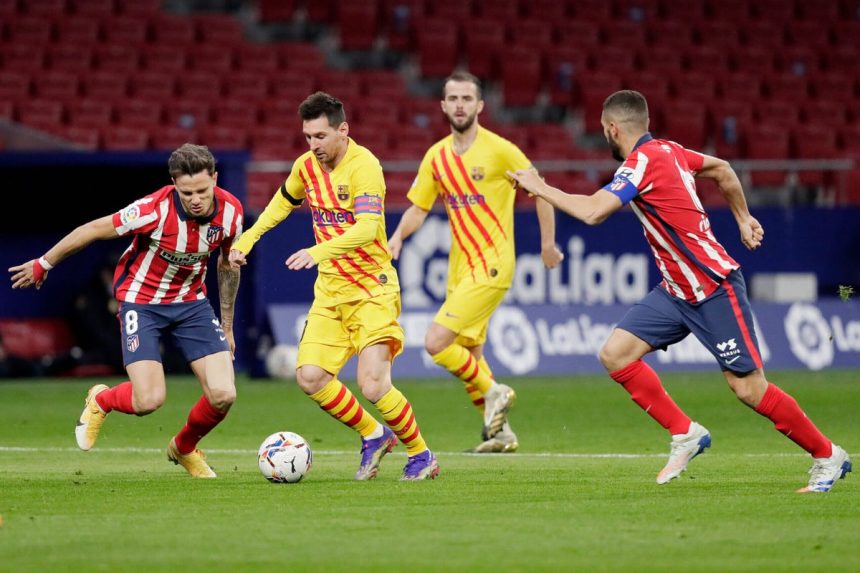
Challenging for top positions in La Liga is not determined by reputation alone. Beyond the traditional elite, several teams periodically enter the conversation due to structural stability, tactical clarity, and sustainable performance indicators. Identifying which teams truly have top-finish potential requires separating temporary form from conditions that hold over a full season. This analysis focuses on why certain teams can realistically remain in the top tier rather than briefly touch it.
Why “top-finish potential” is different from short-term form
Short-term form reflects momentum; top-finish potential reflects durability. Teams can win several matches in a row through variance, but finishing near the top requires resistance to regression, injuries, and schedule pressure. The cause is structural depth and repeatable performance; the outcome is consistent point accumulation; the impact is sustained presence in the upper table.
In La Liga, where point gaps compress behind the elite, durability matters more than peak performance. Teams without structural support usually fade once opposition adapts.
Structural foundations that support a top-table push
Teams capable of challenging the top positions share foundational traits that stabilize results across different opponents and match states. These traits reduce volatility rather than increase spectacle.
Before identifying them, context matters. These foundations do not guarantee wins; they prevent collapse. The explanation below is necessary because many teams display one or two strengths without achieving balance.
- Clear tactical identity applied home and away
- Defensive structure that limits high-quality chances conceded
- Midfield profiles capable of controlling tempo under pressure
- Squad rotation that preserves performance level
Interpreting this list shows that top-finish potential is built on predictability. Teams that know how they will compete every week avoid long negative streaks, which is the primary separator between top-six challengers and mid-table sides.
Why consistency against weaker teams matters more than big results
Upsets against elite clubs attract attention, but league position is shaped by performance against lower-half opponents. Teams with top ambitions consistently extract points from matches where they dominate territory.
The cause is tactical discipline against low blocks; the outcome is controlled wins rather than chaotic draws; the impact is steady point growth. Teams that rely on emotional peaks against strong opponents often drop points elsewhere, eroding top-finish probability.
Squad depth as the hidden limiter
La Liga seasons expose depth more brutally than single-match analysis. Injuries, suspensions, and fixture congestion test whether performance drops when rotations occur.
Depth is not only about bench quality. It includes positional redundancy and tactical flexibility. Teams that can replace profiles rather than individuals maintain output when disruptions occur, preserving league position across long stretches.
Comparing profiles of realistic top-finish contenders
To clarify which teams can realistically finish near the top, it is more useful to compare profiles than to name clubs. The table below outlines common contender profiles and their strengths.
| Team Profile | Core Strength | Primary Risk | Top-Finish Stability |
| Elite possession control | Territorial dominance | Transition exposure | High |
| Compact high-efficiency | Defensive resistance | Goal scarcity | Medium-high |
| Balanced hybrid | Adaptability | Execution errors | Medium-high |
| Momentum-driven | Emotional intensity | Regression | Low |
This comparison shows that teams with adaptability or defensive resistance sustain challenges longer than teams built purely on momentum. Stability, not excitement, defines realistic top-table potential.
Data signals that separate contenders from pretenders
From an educational perspective, data helps identify whether a team’s position is sustainable. Certain indicators stabilize earlier than league rank and reveal true competitive level.
Before listing them, it is important to understand why points alone mislead early. Scheduling asymmetry and variance distort perception. The explanation below frames which metrics matter.
- Expected goals difference per match
- Shot quality conceded rather than shot volume
- Points earned from losing positions
- Goal difference stability across venues
Interpreting this list shows that true contenders perform well across contexts. Teams that rely on narrow margins without defensive stability often slide once variance normalizes.
Market perception and top-finish narratives
Public and media narratives frequently elevate teams into the “top contender” discussion prematurely. Markets often react to streaks rather than structure.
Under situational conditions where momentum drives expectation, observation leads to implication before reference. During this evaluation, ufabet auto may be examined within a broader market comparison context, not to predict final standings, but to observe whether futures pricing or match odds already assume top-level consistency that underlying data does not yet support. When prices reflect narrative rather than durability, top-finish probability is often overstated.
Where top-finish potential breaks down
Even structurally sound teams fail under specific constraints. Tactical rigidity, lack of scoring diversity, or fixture overload can halt progress.
Conditional scenarios that reduce top-table chances
Top-finish potential weakens when teams cannot adapt to compact defenses, when key midfield roles lack rotation cover, or when European commitments stretch squads beyond capacity. These conditions expose limits that league position alone does not reveal.
Summary
La Liga teams with realistic chances to finish near the top are defined by structure, consistency, and resistance to variance. Tactical clarity, defensive stability, and squad depth matter more than short-term form or high-profile wins. By focusing on durability rather than momentum, top-finish potential becomes a measurable, predictable concept rather than an emotional projection.