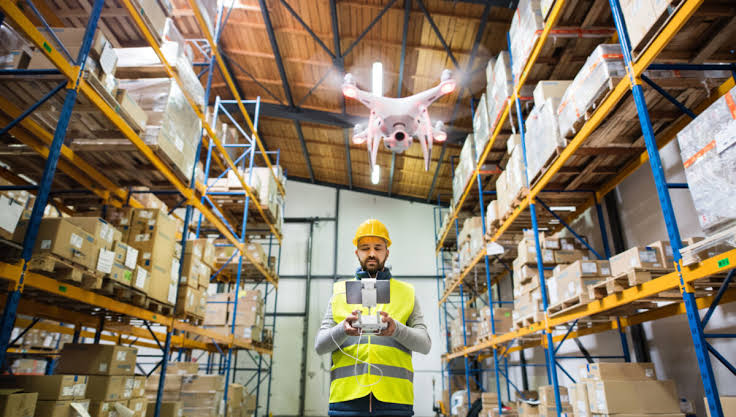
The use of drones has evolved from a novelty confined to entertainment into one of today’s most versatile technologies. Equipped with advanced sensors, high-resolution cameras, and artificial intelligence systems, these devices are being used to perform tasks with greater precision, speed, and safety across various sectors of society.
In agriculture, smart drones are already helping producers monitor vast planting areas, identify crop issues, and analyze soil conditions. With detailed imagery and real-time data, farmers can make more efficient decisions, reduce waste, and boost productivity without relying solely on traditional methods.
The construction industry is also leveraging this technology. Drones are used to track construction progress, inspect hard-to-reach areas, and create digital terrain maps. This application reduces worker risk and provides companies with a more comprehensive view of project status.
Beyond professional applications, drones are part of an ever-expanding digital ecosystem. The internet brings together various platforms and services catering to diverse audiences—including specialized environments like 20Bet—demonstrating how technological evolution has created new forms of interaction and online experiences.
In the fields of security and monitoring, drones offer valuable capabilities for overseeing large events, assisting emergency teams, and conducting searches in inaccessible areas. Powered by artificial intelligence, some models can identify patterns, recognize objects, and rapidly transmit information to the relevant teams.
Another significant advancement involves automated deliveries. Logistics companies are exploring the use of drones to transport small items, thereby reducing delivery times and increasing operational efficiency. Although challenges regarding regulation and infrastructure remain, this application has the potential to transform the future of goods transport.
Despite these benefits, the widespread adoption of smart drones necessitates attention to issues such as privacy, security, and responsible use. Given their ability to capture images and collect data, establishing clear rules is essential to ensure the technology is used ethically. With the evolution of artificial intelligence, more advanced sensors, and faster communication networks, drones are expected to become even more intelligent and autonomous. This technology represents a new way to explore airspace and perform complex tasks, offering innovative solutions for businesses, governments, and users. The future of drones demonstrates how the combination of automation and connectivity can transform entire sectors and create new possibilities in an increasingly technological world.