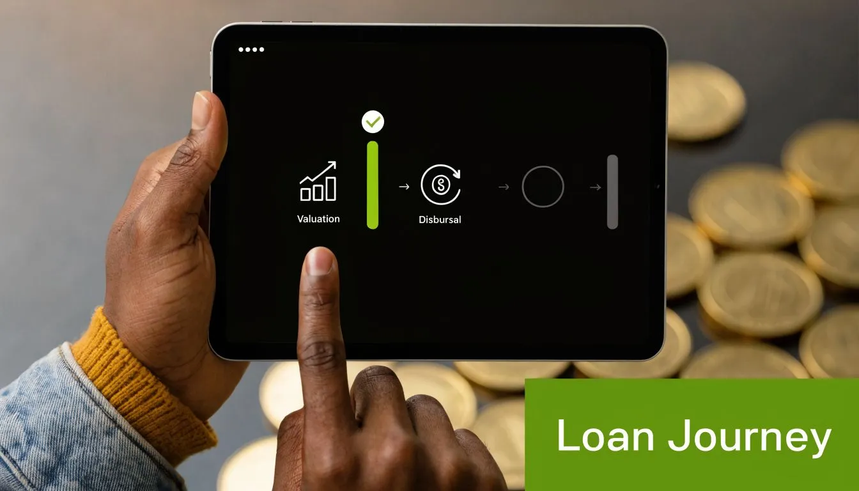
Walking into a branch with a bag of jewelry used to be the only way this worked. Someone at a counter would weigh it, test it, disappear into a back room, and eventually come back with a number.
A lot of that process still happens; honestly, gold still has to be physically checked and locked away somewhere secure. What’s changed is everything wrapped around that core step, the part where you apply, get valued, and actually receive the money.
What Does “Digital” Actually Mean for a Gold Loan Here?
Not that the gold itself becomes digital. It means the paperwork, the tracking, and a good chunk of the application no longer require standing at a counter for hours.
You can start an application from home, get a rough estimate of what your gold might fetch, and only visit a branch or arrange a pickup once the numbers make sense to you. The gold still gets physically examined by someone qualified to do it. The waiting around it used to involve just shrinks considerably.
How Is the Gold Actually Valued Before a Loan Is Sanctioned?
Through a method the lender doesn’t get to invent on its own. RBI requires gold pledged for a loan to be valued using a prescribed approach rather than whatever number the market shows that day, generally based on the lower of the previous day’s closing rate or a short recent average.
Purity gets checked too, since jewelry rarely comes at pure gold content and the valuation adjusts for whatever the purity turns out to be. None of this is something an app can shortcut; someone still has to physically test the metal before a final figure gets locked in.
Where Does the Gold Physically Go Once It’s Pledged?
Into the lender’s secure storage, exactly like it always did. Digital convenience covers the process around the loan, not the custody of the gold itself. It sits in a vault, insured, until the loan is repaid and the gold is released back to you.
Most lenders now let you track the status of your pledge, upcoming payments, and any renewal dates without having to call anyone or visit the branch to ask, but the gold itself stays exactly where physical security demands it should.
How Much Can You Actually Borrow Against It?
Within limits the lender doesn’t set entirely on its own either. RBI caps how much can be advanced against pledged gold, using tiered limits that depend on the loan amount, generally somewhere in the range of most of the gold’s assessed value rather than all of it.
That gap exists deliberately, as a buffer in case gold prices move against the lender later. Whatever figure an online estimator shows you before applying is meant as a starting point, not a locked-in promise, since the final number depends on the actual purity and weight once someone’s physically checked it.
How Fast Does the Money Actually Reach Your Account?
Quickly, once the gold’s been checked and the paperwork’s cleared. A lot of lenders now disburse straight through a UPI app or a direct bank transfer, so the money can land in your account within minutes of approval rather than requiring a separate visit just to collect it.
This is honestly one of the bigger practical shifts; the gap between agreeing on a number and actually having usable funds has shrunk from what used to be an entire day’s affair down to something that finishes before you’ve left the branch.
What Does Digital Actually Change Day to Day?
Mostly how you manage the loan after it’s disbursed, not the loan itself. Most lenders offer their own gold loan app where you can check your outstanding balance, see the current value of your pledged gold against what you owe, make a partial payment, or even apply for a top-up if the gold’s value has moved in your favor since disbursal.
A few things worth checking regularly through it:
- Your current loan-to-value standing, so a falling gold price doesn’t catch you off guard.
- Upcoming due dates, especially if you’ve chosen a bullet repayment structure instead of regular EMIs.
- Whether a renewal or closure needs any action from you before a deadline passes.
None of this replaces the physical side of the loan. It just means you’re not flying blind about it between now and repayment.
Mistakes People Make With Digital Gold Loans
- A lot of borrowers treat the online estimate as a guaranteed figure and get caught off guard when the actual sanctioned amount comes in lower after physical verification.
- Some assume everything about the loan happens digitally, including the gold’s custody, when the physical checking and storage step never actually goes away.
- Others forget to track their loan status regularly, missing a shrinking buffer as gold prices move or a renewal deadline that quietly approaches.
- And plenty pick whichever lender processes fastest without comparing what they’ll actually pay in interest over the full tenure.
The Bottom Line
A digital gold loan speeds up everything around the gold: the application, the estimate, the disbursal, and the tracking afterward. It doesn’t change what happens to the gold itself, which still gets physically valued, tested, and stored securely regardless of how modern the rest of the process feels.
Knowing where the convenience actually applies, and where the old rules still hold, is what keeps expectations realistic going in.