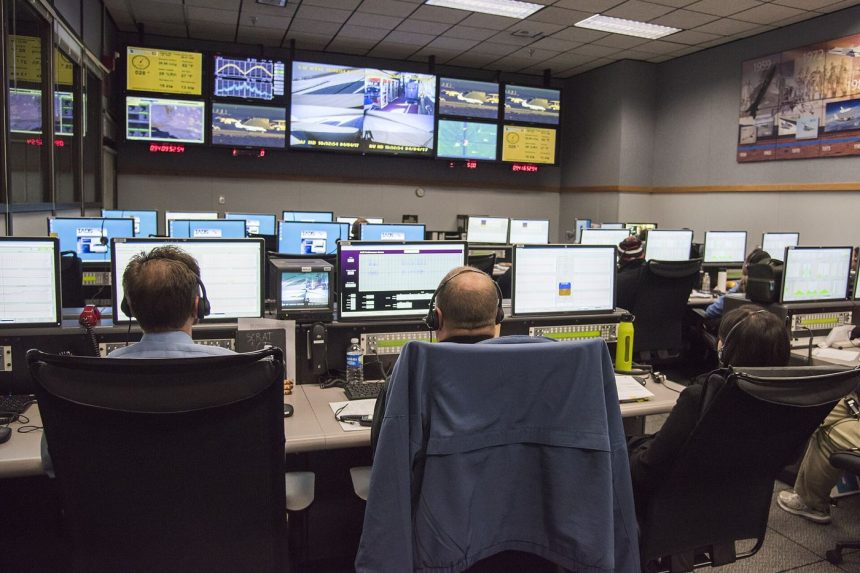
When a major website goes offline, attention usually falls on the outage itself, yet the quiet work that prevents most failures happens long before anything breaks. Inside modern data centres, engineers walk the server aisles checking power feeds, network switches and backup systems that are designed to take over instantly if a primary supply fails. Resilience planning now layers those backups carefully, so a single fault, a local power dip or a damaged cable does not cascade into a wider shutdown. For hospitals, banks and public services that depend on always available systems, that unseen redundancy is the difference between a brief hiccup and a serious disruption to daily life for thousands of people. Regular testing schedules are published internally, and results are reviewed by senior managers who track how quickly each simulated failure was contained and resolved.
What the Evidence Shows
Designing for failure rather than hoping it never happens has become the guiding principle for facility teams. Servers are spread across separate power domains, data is copied between sites, and recovery drills test whether staff can restore services under genuine time pressure, not just on paper. Engineers also monitor thousands of sensors for early warnings, from a fan running slightly fast to a battery losing charge more quickly than expected. The challenge is balancing resilience against cost and energy use, since duplicated equipment still draws power. Well run facilities treat every near miss as a lesson, refining procedures so the next fault is handled faster and with less risk. Independent audits add another layer of assurance, examining maintenance records and access controls so customers can trust that resilience claims reflect daily practice, not marketing. Reporting and analysis from sources such as IEEE Spectrum track the same developments, and specialists following data centre resilience and backup planning say the direction is now consistent across independent lines of evidence.
The Wider Context
Adoption of data centre resilience and backup planning follows a familiar pattern with an unfamiliar speed. Early users tolerate rough edges in exchange for advantage, mainstream users arrive when the tool disappears into existing workflows, and the market consolidates around whoever made that transition feel effortless. Vendors are racing less on raw performance now than on integration, support and trust.
What Happens Next
The realistic forecast for data centre resilience and backup planning is steady integration rather than sudden replacement: embedded in products people already use, improving in increments, and regulated in proportion to its reach. The companies and institutions that plan on that basis, training staff and redesigning processes instead of chasing launches, are the ones the adoption data tends to vindicate. You can follow related developments in our coverage of technology.
It is also worth remembering how quickly the picture in this area has changed before. Positions that looked settled a few years ago have been revised as new data arrived, and the same humility is appropriate now. The strongest coverage of this subject, and the most useful advice, tends to come from sources that update their views openly when the facts move, rather than defending an earlier position long after it has stopped fitting the evidence available.