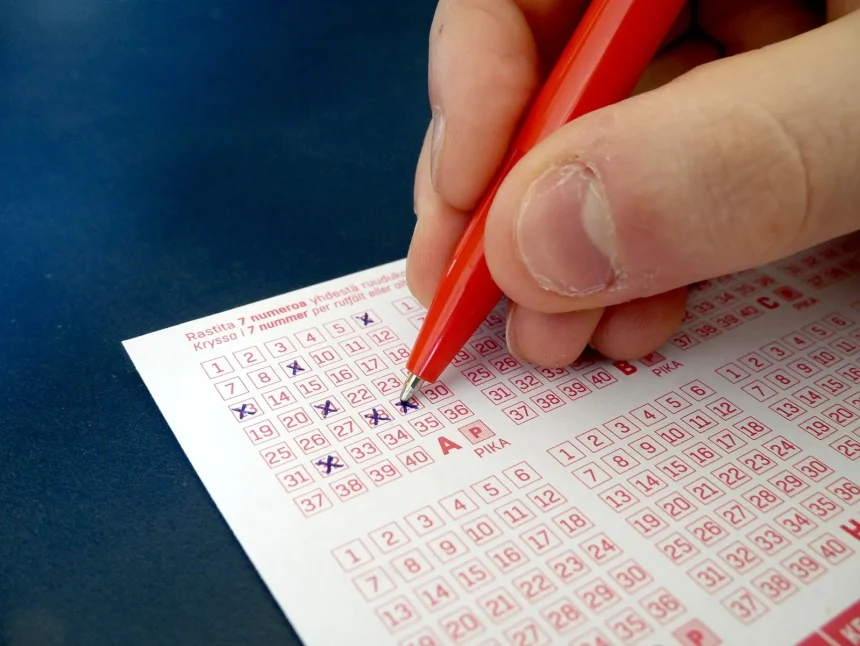
A Powerball jackpot is announced as a single dazzling number — $562 million for the mid-October draw — but no winner has ever received the headline figure. Between the announcement and the bank deposit sits the tax system, and it takes its share first, automatically, before the winner has chosen a financial adviser or told the neighbours. Understanding withholding is the difference between fantasy arithmetic and the real payout.
Our business desk walks through the sequence, because the order matters: the advertised prize, the cash option, federal withholding, the final tax bill and state tax are five separate steps, and each one shrinks the number.
Step one: the jackpot is an annuity figure
The $562 million headline describes the annuity option: thirty graduated payments stretched over twenty-nine years, funded by the lottery investing the prize pool. Most winners instead choose the lump-sum cash option — a smaller, immediate amount representing the actual cash in the prize pool. That single choice typically cuts the headline by a large fraction before tax is even mentioned. The official game rules at Powerball spell out both structures, but the distinction is routinely lost in jackpot-week excitement.
Step two: withholding is not the tax bill
When a large prize is paid, federal withholding is applied immediately at a flat rate on lottery winnings. Winners often mistake this for their final tax. It is not: it is a down payment. Lottery winnings are ordinary income, taxed at the winner’s marginal rate, and a jackpot of this size lands squarely in the top federal bracket. The gap between the amount withheld on day one and the amount finally owed can itself be a life-changing sum, due the following April.
The Internal Revenue Service is plain about the principle: gambling and lottery winnings are fully taxable and must be reported. Advisers therefore tell winners to treat the first cheque as partly the tax authority’s money on temporary loan — and to resist spending against the gross figure.
Step three: the state takes a view
State tax adds a second, highly variable layer. Some states impose no tax on lottery winnings at all; others tax them as ordinary income at significant rates; the state where the ticket was sold, not necessarily where the winner lives, usually governs. On a prize of this scale, the difference between a no-tax state and a high-tax state is measured in tens of millions — one reason jackpot stories always eventually mention where the ticket was bought.
Local taxes can add a further slice in some jurisdictions. None of this is a reason to pity a jackpot winner, but it explains why the same $562 million headline produces very different fortunes depending on geography and payout choices.
Why the gap surprises people every time
The persistence of jackpot surprise says something about how the prize is marketed. Advertising law lets lotteries lead with the largest defensible number — the annuity total — while the tax consequences live in footnotes and in other agencies’ publications. Winners’ advisers have learned to re-anchor expectations within the first phone call: forget the billboard, model the after-tax cash, reserve the tax share in a separate account, and only then discuss dreams. It is unglamorous advice that has saved more fortunes than any investment tip. The jackpot is real; so is the queue of claims standing between the headline and the bank balance, and the tax office is always, always first in it.
The number that actually matters
Stack the steps together — cash option, federal withholding, the top-up to the true federal liability, state tax — and a winner’s spendable fortune, while still enormous, is a fraction of the advertised jackpot. Financial planners add one more caution: the annuity-versus-lump-sum decision interacts with tax in both directions, since thirty annual payments spread income across thirty tax years, while a lump sum concentrates it into one.
None of this diminishes the fun of jackpot week. But the honest headline would read differently: not the size of the prize, but the size of what remains after every layer of withholding and tax has done its quiet, automatic work. That remainder is the real prize — and it is decided less by the draw than by the tax code.